
Do you wake up with a dry mouth, or notice your child sleeping with their mouth open? Mouth breathing can seem like a small habit, but it can affect your teeth, your gums, your sleep, and how you feel during the day. At Beyond Dental & Implant Center in Dallas, TX, we focus on whole-body health, so we treat mouth breathing as a sign worth looking into and help you find what’s behind it.
Understanding Mouth Breathing
Mouth breathing is when you breathe in and out through your mouth instead of your nose. It can happen for different reasons, including a blocked or narrow nasal passage, allergies, a tongue-tie, the way your jaw and bite line up, or a habit that formed over time. Finding the cause matters because the right fix depends on it.
Importance of Addressing Mouth Breathing
Mouth breathing dries out your mouth. Saliva protects your teeth by washing away bacteria and neutralizing acids, so less saliva raises your risk of cavities and gum disease. Mouth breathing is also linked to snoring and sleep apnea, which can leave you tired even after a full night in bed. Addressing it can improve your oral health and overall health at the same time.
Symptoms of Mouth Breathing
Common signs include waking up with a dry mouth, bad breath, frequent cavities, snoring, and restless sleep. You might also notice chapped lips or feel tired during the day. If you or someone in your family has any of these signs, it’s worth getting checked.
How to Stop Mouth Breathing
A few simple habits can help you breathe through your nose more often:
-
Practice breathing exercises that train you to breathe through your nose, especially when you’re relaxed.
-
Use nasal strips at night to help open your nasal passages.
-
Run a humidifier in your bedroom to keep your airways from drying out.
-
Manage allergies so congestion doesn’t push you to breathe through your mouth.
These habits can help over time. If your nose feels blocked most of the time, see your physician to rule out a medical cause.
Professional Treatment Options
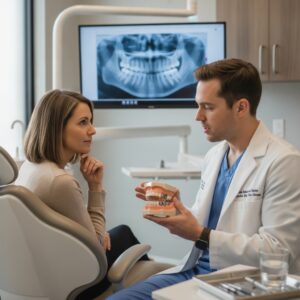
Self-care works for some people, but many need a professional evaluation to find the real cause. At Beyond Dental & Implant Center, our dentist and team evaluate your bite, jaw, airway, and oral health, then create a treatment plan made for you. Our dentist is a Diplomate of the American Board of Dental Sleep Medicine, so we include sleep and breathing concerns in our care.
The Role of Specialists
Specialized care matters most when mouth breathing is linked to other conditions like sleep apnea or TMJ disorders. Depending on what we find, treatment may include a custom oral appliance, TMJ care, or a tongue-tie release for adults. If a medical issue like a nasal blockage needs attention, we may also recommend that you see your physician.
Mouth Breathing Solutions at Beyond Dental & Implant Center
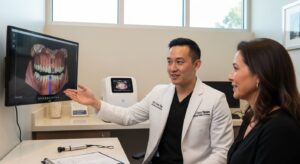
Every patient is different, so at Beyond Dental & Implant Center there’s no single fix that works for everyone. We use digital X-rays and other modern tools to see what’s going on, then build a plan around your needs. Our whole-body approach looks at how your bite, jaw, and airway work together, since a problem in one area often affects the others.
Sleep Apnea and Mouth Breathing
Mouth breathing is often linked to sleep apnea, a condition where your breathing repeatedly stops and starts during sleep. It often happens when the muscles in your throat relax too much and block your airway. Treating sleep apnea and related habits can help you sleep more deeply and wake up rested.
Impact on Sleep
Options like CPAP or a custom oral appliance that gently repositions your jaw can keep your airway open at night and improve your sleep. For patients who are missing most of their teeth, rebuilding the bite with options like All-On-4 implants restores how your teeth and jaw work together, which is part of our whole-body approach.
When to Seek Professional Help
If home remedies don’t help, or you’re dealing with constant fatigue, loud snoring, or frequent dental problems, it’s time for a professional evaluation at Beyond Dental & Implant Center. The sooner you find the cause, the sooner you can start breathing and sleeping better.
FAQs About How to Stop Mouth Breathing
Can children outgrow mouth breathing?
Some children do, but mouth breathing that doesn’t go away should be checked by a dental professional or your child’s doctor.
Are there specific exercises to help stop mouth breathing?
Yes. Breathing exercises can help you get used to breathing through your nose. Ask our team for guidance that fits your situation.
How does mouth breathing affect oral health?
It dries out your mouth, and less saliva means a higher risk of tooth decay, gum disease, and bad breath.
Do over-the-counter solutions work?
Nasal strips and humidifiers can bring temporary relief, but if mouth breathing keeps happening, a full evaluation is the best next step.
Is mouth breathing linked to anxiety?
It can be. Stress and anxiety can change your breathing patterns, including making you breathe through your mouth.
Breathe Easier, Sleep Better
If you or someone you love is dealing with mouth breathing, you don’t have to just live with it. Contact Beyond Dental & Implant Center in Dallas, TX, to schedule a consultation. We’ll help you find the cause and build a plan for easier breathing, better sleep, and a healthier smile.